
 Posted by
 Introduction
Good sleep keeps the body healthy and the mind active. Many people sleep for hours but still wake up tired, confused, or irritated. This problem often continues for months or even years without a clear reason. Poor sleep affects work performance, mood, memory, and overall health. In such cases, doctors recommend a sleep study to understand what happens during sleep.
A sleep study test helps doctors identify hidden sleep problems that cannot be detected during routine checkups. People who snore loudly, stop breathing during sleep, or feel extreme tiredness during the day often need this test. With the help of advanced monitoring, doctors observe breathing, heart activity, brain waves, and oxygen levels throughout the night.
This detailed guide explains what is sleep study, why doctors suggest it, how it works, who needs it, and how much it costs. You will also learn about symptoms like breathing problems during sleep, daytime sleepiness causes, and how doctors use this test for accurate sleep disorders diagnosis.
What Is Sleep Study
Many people ask, what is sleep study and why it matters so much. A sleep study is a medical test that records body activities while a person sleeps. Doctors use it to detect sleep-related problems that affect breathing, brain function, heart rhythm, and muscle movement.
During the test, trained technicians monitor sleep stages, oxygen levels, eye movement, and airflow. This data helps doctors understand whether the patient sleeps normally or faces interruptions. The test gives clear answers that regular blood tests or scans cannot provide.
A sleep study gives valuable information about sleep quality and sleep cycles. It also helps identify serious conditions like sleep apnea and other disorders that disturb deep sleep.
What Is Sleep Study Test and Why Doctors Recommend It
Many patients ask, what is sleep study test, especially when doctors suggest it after routine visits. A sleep study test checks how the body behaves during sleep and identifies the exact cause of sleep disturbance.
Doctors recommend this test when patients experience the following:
-
Loud and regular snoring
-
Sudden choking or gasping at night
-
Frequent night awakenings
-
Morning headaches
-
Memory and concentration problems
-
Mood changes and irritability
A sleep study test allows doctors to observe real sleep patterns instead of relying only on symptoms. It gives accurate results and helps create the right treatment plan.
Polysomnogram Test Explained Simply
The medical name for a sleep study is the polysomnogram test. This test records multiple body functions at the same time while a person sleeps.
The polysomnogram test tracks:
-
Brain activity
-
Eye movements
-
Heart rate
-
Breathing patterns
-
Oxygen levels
-
Body movements
Doctors rely on this test to identify sleep disorders with clarity. A polysomnogram test gives detailed insight that helps doctors confirm or rule out serious conditions.
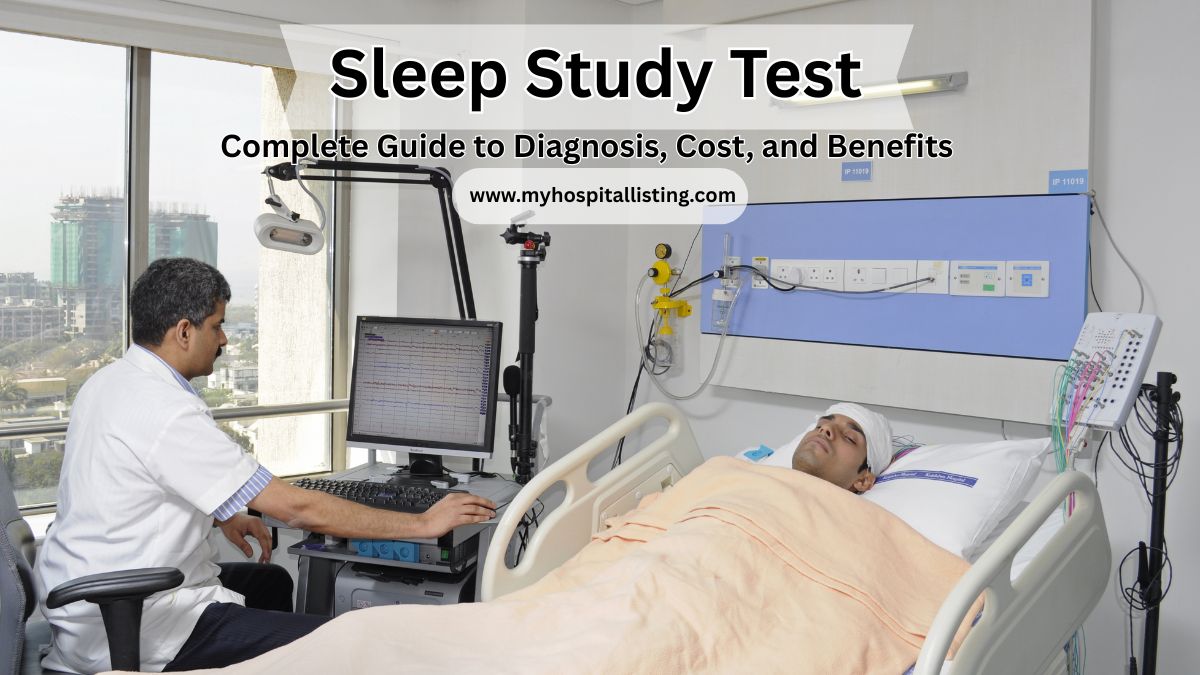
How a Sleep Study Test Is Performed
The sleep study test usually takes place at a sleep center or hospital. Some patients may also qualify for home testing based on symptoms.
Steps involved in the test:
-
The patient arrives in the evening
-
Technicians place small sensors on the scalp, chest, and legs
-
The patient sleeps normally in a quiet room
-
Monitoring continues throughout the night
-
Data gets recorded digitally
The test does not cause pain. The sensors only record body activity. The environment remains comfortable and peaceful.
A sleep study test captures real sleep behavior and helps doctors identify hidden problems.
Sleep Apnea Test and Its Importance
One of the most common reasons for a sleep study is a sleep apnea test. Sleep apnea causes repeated breathing pauses during sleep. These pauses reduce oxygen levels and disturb deep sleep.
The sleep apnea test helps detect:
-
Obstructive sleep apnea
-
Central sleep apnea
-
Mixed sleep apnea
Without diagnosis, sleep apnea increases the risk of heart disease, diabetes, and stroke. A sleep apnea test helps prevent serious complications through early treatment.
Snoring Sleep Study and When You Need It
Snoring may seem harmless, but loud and regular snoring often signals deeper problems. A snoring sleep study helps determine whether snoring affects breathing or oxygen levels.
Doctors recommend a snoring sleep study if:
-
Snoring occurs every night
-
Snoring causes choking sounds
-
Bed partners notice breathing pauses
-
Fatigue persists despite long sleep hours
A snoring sleep study helps doctors decide whether simple lifestyle changes or medical treatment is required.
Breathing Problems During Sleep
Many people suffer from breathing problems during sleep without realizing it. These problems disturb oxygen flow and disrupt sleep cycles.
Common signs include:
-
Sudden gasping at night
-
Dry mouth on waking
-
Night sweats
-
Chest discomfort
A sleep study identifies breathing problems during sleep accurately and helps prevent long-term damage.
Daytime Sleepiness Causes Explained
Feeling tired during the day does not always mean poor nighttime sleep. Several daytime sleepiness causes link directly to sleep disorders.
Major daytime sleepiness causes include:
-
Sleep apnea
-
Restless sleep patterns
-
Oxygen level drops at night
-
Fragmented sleep cycles
A sleep study helps doctors identify exact daytime sleepiness causes and suggest effective solutions.
Sleep Disorders Diagnosis Through Sleep Study
Doctors rely on sleep studies for accurate sleep disorders diagnosis. Symptoms alone do not give a full picture.
Conditions diagnosed through a sleep study:
-
Sleep apnea
-
Insomnia
-
Narcolepsy
-
Periodic limb movement disorder
-
REM sleep behavior disorder
Accurate sleep disorders diagnosis ensures correct treatment and improves long-term health.
Sleep Study Test Cost and Price in India
Many patients worry about sleep study test cost before booking the test. The price depends on location, facility, and test type.
Average sleep study test price in India ranges between reasonable limits based on services provided. Hospital-based tests cost more than home tests.
Factors affecting sleep study test cost:
-
Type of sleep study
-
Hospital infrastructure
-
Doctor expertise
-
City location
Patients should ask for a clear breakup of the sleep study test price before scheduling the test.
Home Sleep Study vs Lab Sleep Study
Doctors may suggest either home testing or lab testing.
Home sleep study:
-
Suitable for mild symptoms
-
Lower sleep study test cost
-
Limited monitoring
Lab sleep study:
-
Detailed analysis
-
Higher accuracy
-
Better sleep disorders diagnosis
Doctors choose the method based on symptoms and medical history.
Preparation Tips Before Sleep Study Test
To get accurate results from a sleep study test, follow these tips:
-
Avoid caffeine on test day
-
Wash hair and avoid oils
-
Carry comfortable sleepwear
-
Take regular medicines unless advised otherwise
Proper preparation ensures accurate test data.
Benefits of Sleep Study Test
A sleep study test offers many benefits:
-
Identifies sleep problems early
-
Improves sleep quality
-
Reduces health risks
-
Enhances daily energy levels
The test helps doctors treat problems before they become severe.
Who Should Get a Sleep Study Test
You should consider a sleep study if you experience:
-
Loud snoring
-
Poor sleep quality
-
Memory issues
-
Mood swings
-
Unexplained fatigue
A sleep study test brings clarity and long-term relief.
FAQs About Sleep Study Test
Frequently Asked Questions (FAQs)
1. What is sleep study
A sleep study is a medical test that records how your body functions while you sleep. It monitors breathing, heart rate, brain activity, oxygen levels, and body movements to detect sleep problems.
2. What is sleep study test
A sleep study test helps doctors understand sleep patterns and identify disorders like sleep apnea, snoring issues, and disturbed sleep cycles. It provides accurate data for diagnosis and treatment.
3. How does a sleep study work
During the test, small sensors are placed on your head, chest, and legs. These sensors record sleep stages, breathing patterns, oxygen levels, and heart rhythm while you sleep naturally.
4. What to expect during sleep study
You will sleep in a quiet, comfortable room. A technician will attach sensors before bedtime. The test is painless, and you can move and sleep normally throughout the night.
5. How long does a sleep study take
A sleep study usually takes one full night, around six to eight hours. In some cases, doctors may recommend extended monitoring based on symptoms.
6. Who needs a sleep study
People who snore loudly, stop breathing during sleep, feel extremely tired during the day, or wake up unrefreshed often need a sleep study for proper diagnosis.
7. Can children undergo sleep study
Yes, children can safely undergo a sleep study. Doctors recommend it for children with snoring, breathing problems during sleep, bedwetting, or poor concentration.
8. Do I need a sleep study
You may need a sleep study if you feel tired despite enough sleep, have loud snoring, experience morning headaches, or face difficulty concentrating during the day.
9. When should I get a sleep study
You should get a sleep study when sleep problems continue for weeks, affect daily life, or increase health risks like high blood pressure or heart issues.
10. What problems does a sleep study detect
A sleep study detects sleep apnea, snoring-related breathing issues, insomnia, restless leg syndrome, narcolepsy, and other sleep-related disorders.
11. How to diagnose sleep apnea
Doctors diagnose sleep apnea using a sleep study test. The test records breathing pauses, oxygen drops, and sleep interruptions, which help confirm the condition accurately.
Conclusion
Sleep plays a vital role in physical and mental health. Ignoring sleep problems leads to serious long-term risks. A sleep study test gives clear answers and helps restore healthy sleep patterns. Early diagnosis improves quality of life and prevents complications.
If you or your loved ones face sleep-related issues, consider consulting a sleep specialist and schedule a sleep study for better health and restful nights.